France's Le Meur Law: what changes for property managers in 2026
On 20 May 2026, any short-term rental listing in France without a national registration number can be delisted from platforms. But that's just the tip of the iceberg. The Le Meur Law also tightens taxation, mandates energy performance certificates, lowers the VAT threshold, and — most critically — makes property managers directly liable for non-compliant properties. Here are the 6 changes you need to understand and the actions to take now.
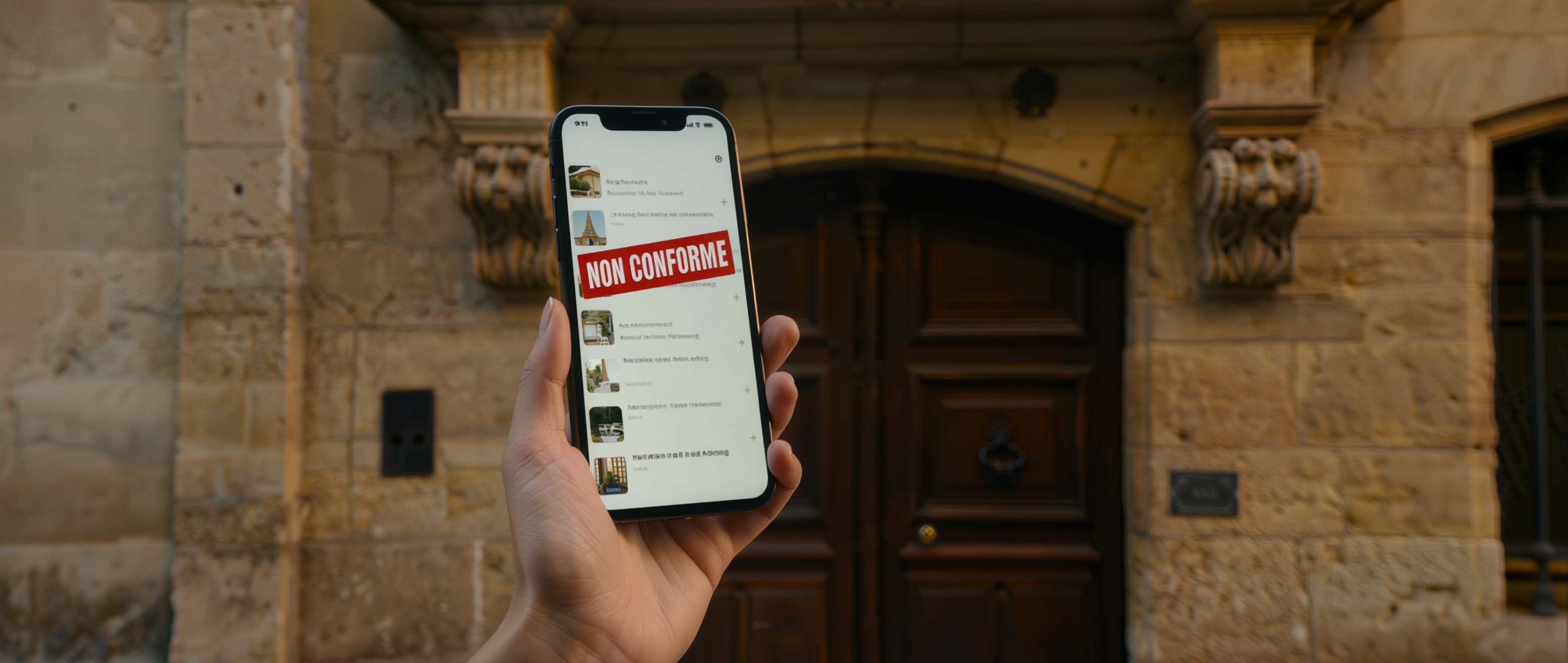
1. Mandatory national registration · Deadline: 20 May 2026
Until now, registering a furnished holiday rental in France depended on the local municipality. Some required it, some didn't. From 20 May 2026, it becomes national and uniform: every short-term rental property must be registered through a dedicated government portal and receive a 13-character registration number, to be displayed on all listings.
For a single-property owner, it's a 20-minute formality. For a property management company handling 50 units, it means 50 files to prepare, 50 numbers to obtain, and 50 listings to update across Airbnb, Booking and Vrbo. At the same time, a new EU regulation on short-term rental transparency kicks in: platforms will share data with local authorities, who can verify compliance in real time and request the removal of non-compliant listings.
2. You are now liable · The end of intermediary immunity
This is the most important and least known change. Before the Le Meur Law, only the property owner could be prosecuted if a rental was illegal in France. A 2022 ruling from France's Supreme Court protected intermediaries. That protection is gone.
The law now defines a real estate intermediary as anyone who "engages in or assists with" a furnished tourist rental. Property managers, concierge services, individuals providing rental services: you're all in scope. And you can be fined the same amount as the owner: up to €100,000 per non-compliant property.
"If you manage 10 properties and an inspection finds 3 non-compliant, that's €300,000 in potential fines."
What France's Le Meur Law means for intermediaries
3. Tighter taxation · Reduced micro-BIC allowances since 2025
This change has been in effect since 1 January 2025. France's micro-BIC tax allowances for short-term rentals have been cut. For unclassified properties, the allowance drops from 50% to 30% (capped at €15,000 annual revenue). For classified properties, from 71% to 50% (capped at €77,700).
In practical terms: an owner of an unclassified property earning €12,000 in rental income used to be taxed on €6,000. They're now taxed on €8,400. Revenue hasn't changed, but the tax bill has gone up. Getting an official tourism classification (a few hundred euros) becomes a meaningful tax optimisation lever that property managers should be recommending to their clients.
4. 10% VAT from €37,500 · The full-service trap
This is the most underestimated change. From 2026, rentals in France offering at least 3 of the following services — cleaning, linen, breakfast, personalised check-in — will be subject to 10% VAT from €37,500 in annual revenue, down from €85,000 previously.
A full-service property management company (cleaning + linen + check-in) ticks all 3 boxes by default. A single active property in a tourist area during high season can cross this threshold. Both your pricing and your owners' revenue projections need to factor this in.
5. Mandatory energy performance certificate · Progressive but starting now
France's energy performance certificate (DPE) becomes mandatory for furnished tourist rentals. Until 31 December 2033, properties rated A to E remain eligible for short-term rental. From 1 January 2034, only A to D will be allowed. Energy-inefficient properties (rated F or G) will be progressively excluded.
Energy renovations take time and cost money. A property management company handling 40 units should audit the DPE status of its entire portfolio now, flag at-risk properties, and inform owners before it's too late.
6. Primary residences · 90-night cap, enforced by municipalities
French municipalities can now reduce the maximum rental period for a primary residence from 120 to 90 nights per year. Paris, Nice, Lyon, Bordeaux, Aix-en-Provence, Annecy, Lille and other cities have already adopted this limit. Airbnb automatically blocks bookings beyond this threshold in 18 French cities. Exceeding the limit carries a €10,000 fine for the owner.
For every primary residence you manage, check the local rules and track nights carefully.
What this means for your business
The Le Meur Law doesn't just add paperwork. It changes the very positioning of property management in France. Owners who don't understand the regulations need guidance. Companies that can explain registration, DPE, VAT and legal liability will stand out from those that just handle cleaning. Helping owners stay compliant — not just operational — becomes a genuine competitive advantage.
National registration: every property needs a 13-character number displayed on all listings by 20 May 2026.
Property manager liability: you can be fined up to €100,000 per non-compliant property, same as the owner.
Tighter taxation: reduced micro-BIC allowances (30% unclassified, 50% classified) and 10% VAT from €37,500 for full-service rentals.
Mandatory DPE: A to E ratings allowed until 2033, A to D only from 2034. Audit your portfolio now.
90-night cap: check local rules for every primary residence. 18 French cities already enforce automatic blocking.
Sources · Law No. 2024-1039 of 19 November 2024 (Le Meur Law), France · Service-Public.fr · This article is an informational summary about French regulation and does not constitute legal advice. If in doubt about your situation, consult a lawyer specialising in French property law.